AGP Executive Report
Last update: 2 days agoOver the last 12 hours, Africa Finance Today coverage leaned heavily toward South Africa’s macro and financial risk picture, alongside targeted business and fintech updates. Moody’s featured prominently with an optimistic assessment that South Africa’s debt trajectory is approaching stabilisation—citing improving fiscal performance and reform momentum—while also warning that debt remains high (above 80% of GDP). In parallel, the South African Reserve Bank governor Lesetja Kganyago said policymakers should keep “options open” as Middle East-linked supply shocks could push inflation higher, even as inflation trends lower overall. The same period also included consumer-facing responses to cost pressures: FNB eBucks launched a fuel-rewards “Fuel Boost” to soften a reported R3.27/L fuel increase, and GoTyme Bank reported one million app migrations after launching a new app, alongside the rollout of customer hubs.
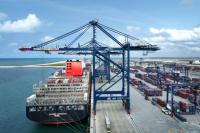
Institutional and governance developments also stood out. The PSA demanded accountability after the announcement that NSFAS would be placed under administration, arguing that maladministration and financial mismanagement must be addressed with a credible, time-bound turnaround plan. South Africa’s port and infrastructure procurement activity also moved forward: TNPA initiated a bidding process for a new private operator for the Port of Cape Town’s liquid bulk terminal under a 25-year concession, with requirements to finance, operate, maintain and refurbish the terminal while ensuring continuity of service. Elsewhere, the coverage included corporate performance updates (e.g., BKIC reporting an 8% rise in first-quarter net profit) and sectoral investment programming such as Enlit Africa’s 2026 keynote agenda focused on practical delivery realities in power, energy and water systems.
Beyond South Africa, the most recent reporting connected external shocks and regional economic conditions to Africa’s financial outlook. An IMF warning said the Middle East war will slow Africa’s economic growth by worsening the cost-of-living crisis, and Gold Fields attributed “significant” commodity price and cost pressures to the US–Iran war’s volatility, including higher diesel, explosives/cyanide, LNG and freight costs. Digital finance and payments innovation also continued: Mastercard and Yellow Card announced a partnership to accelerate stablecoin-enabled payment innovation across EEMEA with initial focus markets including Ghana, Kenya, Nigeria, South Africa and the UAE, while IFC warned Ghana’s digital transformation could stall unless fragmented payment systems, identity platforms and data frameworks are integrated into a single interoperable ecosystem.
Looking across the broader 7-day window, there is continuity in the emphasis on digital integration, fiscal discipline, and infrastructure as growth enablers—though the evidence is more abundant in policy and market commentary than in single “breakthrough” events. Examples include repeated calls to move beyond “digital payments” toward interoperable digital finance (BoG/IFC-related coverage), ongoing attention to debt governance and borrowing limits (Zimbabwe’s Veritas urging compliance with a High Court order), and continued investment narratives around energy transition and financing mechanisms (including SAF facility financing in Egypt and broader energy/solar-related reporting). However, because the most recent 12-hour evidence is dominated by South Africa-specific macro/financial items and a handful of fintech and infrastructure announcements, the overall picture suggests incremental but important momentum rather than one unified continent-wide turning point.
Note: AI-generated summary based on news headlines, with neutral sources weighted more heavily to reduce bias.